You did your research, fell for the heated seat and the self-cleaning wand demo, and spent somewhere between $400 and $8,000 on a smart toilet or bidet seat — a toilet that has electronic controls, a built-in water-spray cleaning wand (the “bidet” function), and sometimes a companion smartphone app for adjusting water temperature, pressure, and drying settings. The installation went fine, and for the first several months everything felt like a minor miracle. Then Month 14 arrived, and the app pushed an update that broke your water-pressure presets. Or the control panel started throwing an error code the manual doesn’t explain. Or you found out that a replacement heating element is a $280 part on backorder from an overseas distribution center. None of that is a reason to avoid these products — they genuinely deliver on comfort and hygiene — but it is a reason to think harder before year one ends. This guide walks through what the two-year-and-beyond ownership picture actually looks like, where the costs cluster, and how to make the right call for your project.
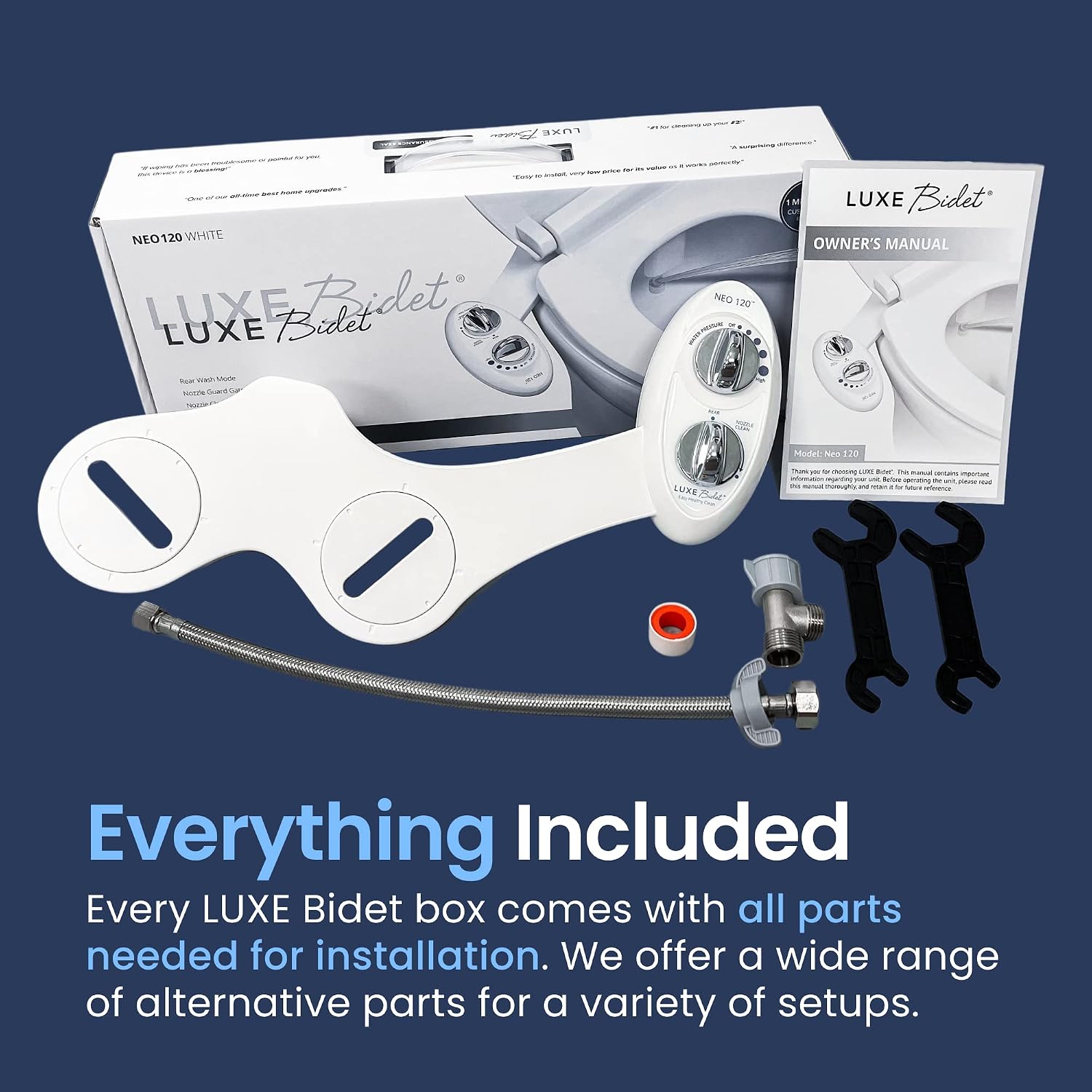
| EDITOR'S PICKSmart Toilet with Warm Water Sp… | Mid-tier[HOROW T0338W Compact One Piece…](https://www.amazon.com/dp/B09WYQCPMP?tag=greenflower20-20) | Budget pick[LUXE Bidet NEO 120 - Single Noz…](https://www.amazon.com/dp/B00A0RHSJO?tag=greenflower20-20) | |
|---|---|---|---|
| Type | One-piece smart toilet | One-piece toilet | Bidet seat attachment |
| Heated seat | ✓ | — | — |
| Warm water spray | ✓ | — | — |
| Foot sensor flush | ✓ | — | — |
| Dual flush | — | ✓ (1.1/1.6 GPF) | — |
| Self-cleaning nozzle | — | — | ✓ |
| Price | $379.99 | $239.00 | $39.99 |
| See on Amazon → | See on Amazon → | See on Amazon → |
Why the Two-Year Mark Is the Real Test
The first year of smart toilet ownership is almost always positive. Warranties — typically one to three years depending on brand and tier — cover the failures most likely to surface early. The problems that shape long-term satisfaction tend to arrive after that window closes.
App-dependent features are the biggest variable. A smart toilet or bidet seat with a companion app relies on the manufacturer keeping that app maintained across iOS and Android operating system updates. This is not a trivial commitment. Consumer Reports’ 2025 owner satisfaction survey flagged app instability as the single most-cited complaint among smart toilet owners who had held their products for 24 or more months. The pattern: a major mobile OS update ships, the manufacturer’s app lags behind by weeks or months, and in the interim, app-controlled features — custom water temperature presets, night-light programming, usage logs on higher-end units — either malfunction or vanish entirely. The physical toilet still flushes; you just lose the intelligence layer temporarily.
This is worth naming explicitly when you’re specifying a unit: the app is a subscription to ongoing software development, even if no subscription fee is charged. Brands with larger North American dealer networks and US-based engineering support — TOTO, Kohler, and Brondell among them — tend to resolve app breaks faster than import-only brands whose update cycles depend on overseas development teams. That’s not a blanket indictment of international brands; it’s a lag-time observation that Architectural Digest’s 2025 buying guide and aggregated Houzz owner reviews both reflect consistently.
Hardware longevity follows a predictable tier structure. Entry-level bidet seats in the $150–$350 range (brands like Bio Bidet and Luxe) are designed around commodity components. They work well early, but the heating elements, solenoid valves (the electronic parts that control water flow), and seat sensors that fail at Year 3 or 4 are often not stocked domestically. Repair economics don’t favor fixing them; most owners in this tier replace the unit rather than repair it. That’s not necessarily a problem if you budget for it — but it changes your lifecycle cost math.
Mid-tier seats in the $400–$900 range (Brondell, Bio Bidet’s Bliss series, Kohler’s C3 line) generally offer better component sourcing and at least one domestic service tier. At the premium end — TOTO Washlets from the $500 S series up to the $1,500–$2,000 S7 range, and integrated smart toilets like the TOTO Neorest at $4,000–$8,000+ or the Kohler Veil intelligent toilet — parts availability and manufacturer service programs are substantially more mature. This Old House’s buying guide notes TOTO specifically for after-sales parts accessibility, a reputation the brand has built across decades of North American distribution.
The Lifecycle Cost Framework: What You’re Actually Comparing
Most buyers anchor on purchase price. The smarter comparison is total cost of ownership over a five-year window, which is where the tier differences become legible.
By the numbers — illustrative five-year cost modeling:
| Tier | Purchase Price | Avg. Year 3–5 Repair or Replace | 5-Year Water/Energy Add | Approx. 5-Year Total |
|---|---|---|---|---|
| Entry bidet seat | $150–$350 | $150–$350 (replace) | $20–$40 | $320–$740 |
| Mid-tier bidet seat | $400–$900 | $80–$200 (repair) | $20–$40 | $500–$1,140 |
| Premium Washlet (TOTO S-series) | $500–$2,000 | $50–$150 (part) | $20–$40 | $570–$2,190 |
| Integrated smart toilet | $4,000–$8,000 | $200–$600 (service call) | $30–$60 | $4,230–$8,660 |
Figures are aggregated from published owner reviews, manufacturer service rate disclosures, and industry reporting; individual experience varies by water hardness, usage frequency, and local labor rates.
A few things jump out. The gap between entry and mid-tier narrows meaningfully over five years once you factor in the near-certain replacement cycle at entry level. And the integrated smart toilet tier — TOTO Neorest, Kohler Veil, Duravit SensoWash Starck — carries real service-call costs, but those costs are spread across hardware that is genuinely built for decade-plus lifespans with professional servicing, not consumer replacement cycles. Contract Design’s reporting on hospitality and commercial bidet installations reinforces this: facilities managers who specify premium integrated units report lower cumulative service disruption than those who rotate through mid-tier replacements on a four-year cycle.
Water and energy costs are real but rarely decisive. A bidet seat’s warm-water and seat-heating functions typically add $20–$40 per year in energy costs based on manufacturer energy consumption ratings — less than most people expect, and offset at least partly by reduced toilet paper consumption.
App Reliability: The Decision Variables That Actually Matter
If app control is important to your project — and in a master bath renovation or a design-forward primary bath, it often is — here’s the framework for evaluating it before you commit.
Question 1: Is the app core functionality or convenience functionality? On units like the TOTO Neorest or Kohler Karing, the app supplements physical controls that remain fully functional independently. An app outage costs you convenience, not usability. On some lower-cost units, the app IS the primary interface; a broken app means a broken experience. Always verify what the physical remote or panel can do without the app.
Question 2: How long has the app been in continuous release? A manufacturer with four or more years of continuous app update history — traceable through the App Store or Google Play release notes — has demonstrated at minimum a moderate commitment to platform maintenance. A brand whose app launched 18 months ago alongside a new product line is an unknown quantity at year three.
Question 3: What is the support structure in your market? For residential projects, the question is whether a factory-authorized service technician can reach you within a reasonable timeframe. TOTO and Kohler maintain authorized service networks in most major US metros. For international brands — even well-regarded ones like Duravit or Geberit — confirm that the US distributor has a domestic service program, not just a return-to-warehouse process. Houzz discussions from owners in mid-sized markets consistently flag this as a point of friction with European-origin integrated toilets.
Question 4: Does your project have ADA clearance requirements? This is often overlooked in the smart toilet conversation but matters acutely for commercial, institutional, or accessibility-driven residential projects. The 2010 ADA Standards for Accessible Design (available at ada.gov) specify seat height ranges (17–19 inches to the top of the seat) and side-transfer clearances (60 inches minimum from the side wall) that some integrated smart toilet footprints challenge. Bidet seats added to existing ADA-compliant toilets can also raise seat height above the compliant range — worth measuring and disclosing to the client before specifying.
The “If X, Then Y” Decision Rules
You’ve absorbed the framework. Here’s how to use it.
If you’re specifying for a master bath renovation at the $8,000–$15,000+ investment level: Anchor on TOTO’s S7 Washlet or Neorest series, or Kohler’s Veil or Karing integrated toilet. The five-year cost differential over mid-tier is real but proportionate to the overall project investment, and the app stability and parts support are meaningfully better. Budget a service call or two — it’s a known cost, not a surprise.
If you’re outfitting a secondary bath or guest bath and want smart-seat functionality without the integrated toilet price: The TOTO C5 or C2 Washlets and Brondell’s Swash series represent the mid-tier sweet spot that aggregated reviews — including coverage from Architectural Digest and This Old House — consistently validate. Plan on the physical remote doing most of the heavy lifting, and treat the app as a bonus, not a dependency.
If your client is an enthusiast renovator who fell in love with a European integrated toilet (Duravit SensoWash, Geberit AquaClean): These are legitimate premium products with strong design credentials — Dezeen’s coverage of both brands speaks to their standing in design-forward projects. But confirm domestic service availability and import parts lead times with your distributor before specifying. The aesthetic and build quality are real; the service network in North America is thinner than TOTO’s.
If this is a commercial or institutional project: Skip the consumer-app ecosystem entirely. Specify a commercial-grade integrated toilet from a brand with documented commercial service contracts — TOTO’s commercial division and Kohler’s commercial line both publish lifecycle support commitments that consumer products don’t match. Confirm ADA compliance dimensions against the installed rough-in and clearance conditions before the spec is finalized; per ADA.gov standards, this is not a post-installation correction.
If the budget is genuinely constrained (under $400 for the seat): Set expectations clearly. Entry-level bidet seats deliver meaningful hygiene and comfort benefits, but treat them as a four-year appliance, not a ten-year fixture. Don’t specify them in a renovation where the tile, vanity, and plumbing are all long-lifespan investments — the replacement cycle creates a mismatched renovation moment.
The honest summary of year two and beyond: the technology works, the comfort benefits are real, and the long-term costs are manageable if you’ve picked the right tier for the project context. What catches owners off guard isn’t the product — it’s the gap between what the app promised at unboxing and what it delivers when a mobile OS update doesn’t go smoothly. Build that variable into your spec conversation from the start, confirm service network depth before you commit, and the math works out in the product’s favor at every tier above entry-level. The first year is marketing. Year two is when you find out what you actually bought.