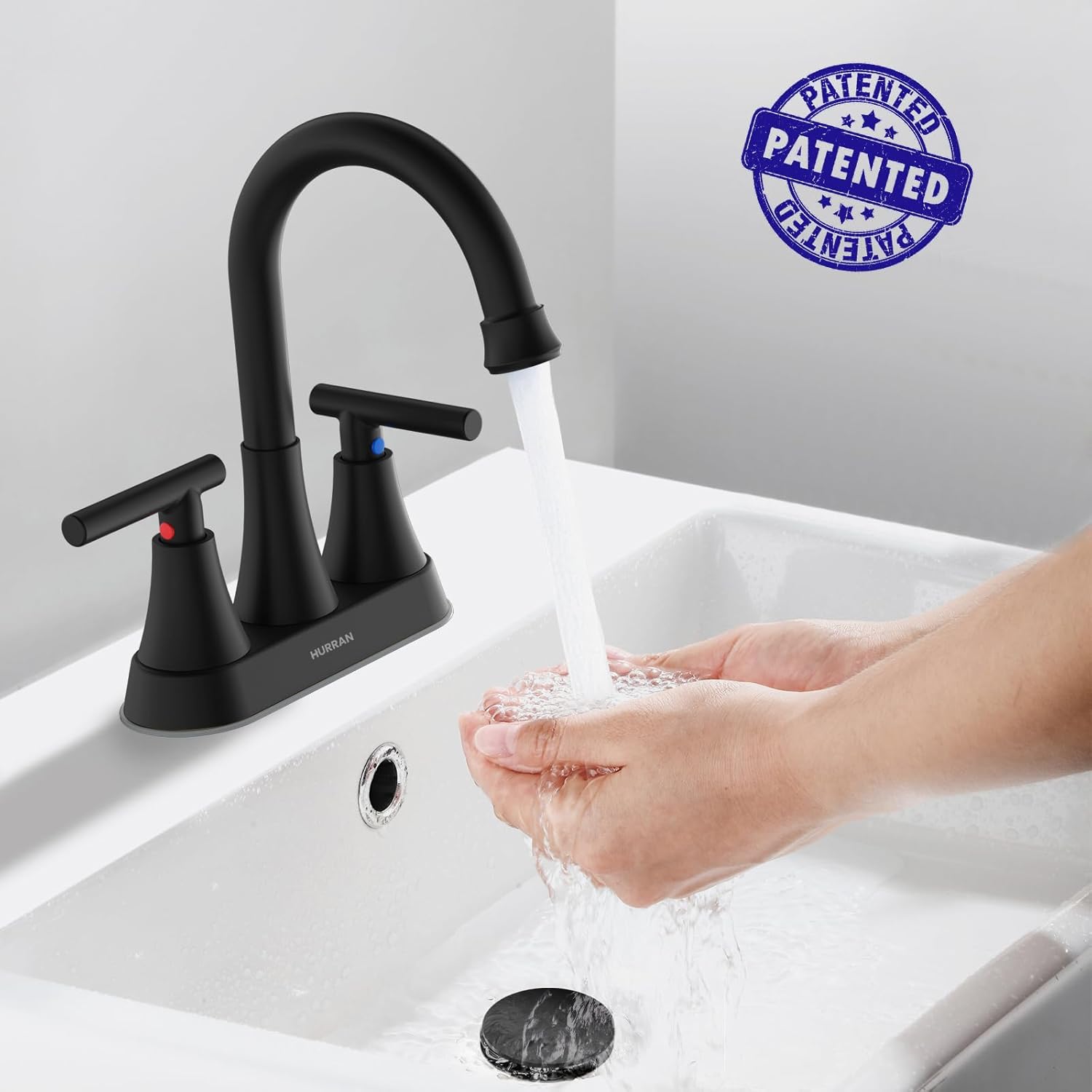
You’ve found a faucet on a major home-improvement site for $38. The listing photo looks sharp — brushed nickel finish, clean lines, solid handle action. The reviews average 4.2 stars. You’ve got a powder room refresh on a tight budget, and this feels like the smart move. Maybe it is. But here’s what the product photo won’t tell you: that “brushed nickel” is almost certainly a thin PVD coating (Physical Vapor Deposition — a vacuum-applied metallic film) over zinc die-cast, and under daily water splashing and cleaning-product contact, you’ll know by month eight whether the manufacturer skimped on coating thickness or sealing. This article exists to close that information gap. We’ll cover exactly what the sub-$50 faucet tier is built from, where finish degradation actually starts, what specs to look for to push the longevity curve in your favor, and — critically — when buying cheap is the right call versus when it’ll cost you twice.
What’s Actually Inside a $38 Faucet
Let’s start with materials, because this is where the under-$50 tier lives and dies.
Body material: The large majority of faucets at this price point use zinc die-cast (also called zamak) bodies rather than solid brass. Zinc die-cast is lighter, cheaper to tool, and perfectly capable of holding a finish for years — in dry, low-mineral-water environments. The problem is that zinc is more porous than brass and more vulnerable to the micro-etching that hard water, soap scum, and acidic cleaners accelerate. Solid-brass bodies, which are standard on mid-tier Moen and Delta lines starting around $80–$120, resist corrosion more reliably and hold threading better over decades of use. This Old House’s faucet selection guide notes that solid brass is the preferred body material for longevity, particularly in high-humidity installations.
Cartridge quality: Most sub-$50 faucets ship with a ceramic disc cartridge — a genuinely good technology that replaced rubber washers and should, in theory, last 10–15 years. The catch is that budget-tier ceramic cartridges use thinner discs and less precise tolerances than the ceramic cartridges in, say, a Moen 1222 or Delta RP46074. Aggregate reviews on major retail platforms consistently show a pattern: early cartridge drip failures (12–24 months) are significantly more common in the under-$50 tier than in faucets from $80 and up. Consumer Reports’ bathroom faucet reliability data reinforces this pattern, with budget-tier brands showing notably higher rates of drip complaints within two years of purchase.
Valve seats and supply connections: Expect plastic valve seats and braided-stainless supply lines at the lower end of this tier (under $45). The supply lines are typically fine — braided stainless is braided stainless. Plastic valve seats are the weak point; they can crack under overtightening or thermal cycling in climates with wide temperature swings.
By the Numbers
| Price tier | Typical body material | Finish process | Avg. warranty | Cartridge replacement cost |
|---|---|---|---|---|
| Under $50 | Zinc die-cast | Thin PVD or electroplate | 1 year limited | $8–$18 (if available) |
| $80–$150 (Moen/Delta mid) | Solid brass | Thick PVD or Spot Resist | Lifetime (limited) | $15–$35, widely stocked |
| $200+ (Kohler/Hansgrohe) | Solid brass | Thick PVD, ceramic, DuraBrass | Lifetime | $25–$60, brand-supported |
That warranty gap matters more than it might look: a 1-year limited warranty on a $38 faucet means you’re essentially self-insuring after month 13. A lifetime warranty on a $110 Moen means the manufacturer eats the cartridge replacement cost if it drips. Bob Vila’s buyer’s guide explicitly flags warranty length as a primary decision criterion for faucets — it’s a proxy for manufacturer confidence in component quality.
Where the Finish Actually Breaks Down (and Why)
Finish degradation in the budget tier isn’t random. It follows a predictable pattern that’s worth understanding before you spec a faucet for any installation.
The failure sequence on budget brushed nickel and matte black:
-
Micro-scratching from cleaning — The PVD layer on zinc die-cast is typically 0.2–0.5 microns thick on budget fixtures. Abrasive cleaners (even “gentle” ones with micro-particles), rough sponges, or hard water deposits that are scrubbed off begin abrading this layer within months in a frequently used bathroom.
-
Water spot etching — Hard water (above ~120 ppm calcium carbonate, which covers most of the US Mountain West, Midwest, and Southwest) leaves mineral deposits that, if allowed to dry and repeat-cycle, micro-etch the finish surface. On a thick PVD or Spot Resist finish (Moen’s proprietary coating), this is a minor nuisance. On thin electroplate over zinc, it’s the beginning of the end.
-
Base metal bleed-through — Once the finish layer is compromised, zinc oxidizes and the characteristic greenish-gray zinc oxide bloom appears, usually first around the base of the spout where water pools and at the aerator ring.
Apartment Therapy’s coverage of budget bathroom faucets flags exactly this sequence: several well-rated under-$50 options that look beautiful in the listing photo show visible finish wear at 6–12 months in reviewers’ photos, specifically at the handle base and spout-basin joint.
The matte black problem deserves its own callout. Matte black is currently (mid-2026) the dominant finish trend in bathroom renovation at all price tiers. At the premium end — Brizo, Hansgrohe, Waterworks — matte black is achieved with a thick PVD process that resists fingerprints and cleaning. At sub-$50, matte black is almost universally a painted or thin-electroplated coating. Owners consistently report that matte black budget faucets show wear patterns (lighter patches, fingerprint etching that won’t wipe clean) faster than brushed nickel at the same price point, because the underlying zinc shows as a distinctly different color when the coating thins. If matte black is important to the project aesthetic, this is the tier where you most want to spend up.
Brushed brass and unlacquered brass at this price point: Don’t. Authentic unlacquered brass requires solid brass substrate and a specific finishing process. What’s sold as “brushed brass” or “gold” under $50 is typically a thin gold-tone electroplate that oxidizes unevenly within a year. For any project where finish consistency matters — matching to towel bars, toilet paper holders, or a mirror frame — the cross-finish matching problem is nearly unsolvable at this price tier because batch-to-batch color consistency is poor.
The Cases Where Under $50 Is Actually the Right Answer
This isn’t a piece designed to talk you out of every budget faucet — that would be dishonest. There are real scenarios where the sub-$50 tier is the correct call.
Rental property bathrooms: If you’re managing rental turnover and a faucet gets damaged, stolen hardware fittings, or ground-in wear from high-tenant-rotation use, a $40 faucet that you replace every 4–5 years has a lower total cost of ownership than a $130 faucet in the same abuse environment. The math generally favors budget fixtures in rental contexts when the bathroom won’t be shown to premium-tier tenants.
Temporary installations: Gut renovation staged over multiple phases, a bathroom being used during construction before final finishes go in, or a flip property where the buyer will renovate immediately — these are legitimate use cases for the cheap tier.
Low-use powder rooms: A half-bath that sees occasional guest use (hand-washing only, minimal cleaning product exposure) will genuinely hold a budget finish longer than a primary bath with daily splashing, steam, and regular cleaning. Several reviewers at major retail platforms specifically note that their guest-bath budget faucets look nearly new at 3–4 years because the installation sees so little use.
When the ADA lever-handle format matters more than finish: Per ADA Standards for Accessible Design, Section 606, faucet controls in accessible bathrooms must be operable with a closed fist and require no tight grasping, pinching, or twisting. Many sub-$50 single-lever faucets meet this standard geometrically, and for a commercial or institutional context where finish durability is secondary to code compliance and budget is fixed, the tier can be appropriate — though commercial facilities managers should still verify NSF/ANSI 61 certification (the standard for safe drinking water contact materials, published by NSF International) before spec’ing any budget-tier faucet in a new commercial installation. Not all sub-$50 faucets carry this certification, and for healthcare or school facilities, it’s non-negotiable.
What to Look For if You Do Buy in This Tier
If the budget is fixed and you’re buying under $50, here’s how to push the survivability odds:
Check the body material explicitly. “Zinc alloy” in the spec sheet means zinc die-cast. “Brass body” should say “solid brass” — if it just says “metal,” that’s a flag. The This Old House faucet guide recommends treating any listing that doesn’t explicitly state “solid brass” as zinc die-cast for decision-making purposes.
Verify NSF/ANSI 61 certification. This appears in the product specs, not just the listing copy. Budget faucets from established brands (AmazonBasics, Glacier Bay, Moen’s lowest-tier Adler line) are more reliably certified than unbranded imports.
Buy from a brand with stocked replacement cartridges. A $40 faucet from a brand whose cartridge is unavailable in two years is effectively disposable. Glacier Bay (Home Depot house brand), Moen Adler, and Delta Foundations all have replacement cartridge infrastructure. Generic import faucets often do not.
Choose brushed nickel over matte black or brushed brass at this price point if longevity matters. Brushed nickel at the budget tier shows wear more gradually than either of the trend finishes, and minor wear blends more naturally with the underlying zinc tone.
The Decision Rule
If X, then Y:
- If it’s a rental, flip, or temporary install — buy under $50, choose brushed nickel, verify NSF/ANSI 61, stick with Glacier Bay or Delta Foundations for cartridge availability.
- If it’s a primary bath you’ll live with for 5+ years — the $80–$120 tier (Moen Chateau, Delta Foundations solid-brass models, lower Kohler Coralais) is where finish longevity and warranty coverage change the math enough to justify the step up.
- If finish matching to other hardware matters — don’t go under $50 for any finish. Batch-to-batch color consistency is poor enough that matching a second faucet from the same SKU six months later is unreliable, let alone matching to towel bars from a different brand.
- If it’s a commercial or institutional install — NSF/ANSI 61 and ADA lever-handle compliance are table stakes regardless of price. Verify both before you spec, and consider whether a $90–$130 commercial-grade fitting (Moen M-DURA, Delta Commercial line) is actually cheaper over a 10-year lifecycle than replacing a $40 faucet every 3–4 years under heavier use.
The under-$50 bathroom faucet isn’t a bad product category — it’s a context-specific tool. Use it in the right context, and it earns its place. Use it in the wrong one, and you’ll be back under the sink by year two wondering why you didn’t spend the extra $60 the first time.