You ordered the brushed gold faucet from Kohler, then matched the towel bars from Moen because they were forty dollars cheaper. They arrived, you held them side by side under the vanity light, and the “gold” was off — one leaning warm and honeyed, the other a cool champagne that read almost green. Welcome to finish-matching across brands, the most underestimated source of bathroom renovation regret. A finish, in plumbing hardware terms, is the surface coating applied over a base metal (usually brass or zinc) that determines a fixture’s color, sheen, and corrosion resistance. The problem is that finish names — Brushed Nickel, Matte Black, Brushed Gold — are marketing labels, not standards. Kohler, Delta, Moen, and Grohe each apply their own proprietary formulations, and the visual result can diverge enough to look mismatched in real light. This guide breaks down exactly how those brands differ finish by finish, gives you a decision framework for cross-brand mixing, and tells you when to pay the premium to stay inside a single brand family — and when you safely don’t need to.
Why Finish Names Mean Different Things at Different Brands
The gap between a name and a real-world color is rooted in how finishes are made. Most premium faucet finishes today use a process called PVD (Physical Vapor Deposition) — a vacuum-chamber technique that bonds metallic particles to the fixture surface at the molecular level. PVD finishes are harder and more scratch-resistant than traditional electroplated coatings, and they’re what all four major brands rely on for their top-tier lines. But the alloy composition of the vapor, the base material underneath, and the final topcoat lacquer (if any) all shift the final color.
Grohe’s technical materials describe their StarLight PVD chrome as engineered to a specific spectral-reflectance target, which is why Grohe chrome tends to look distinctly cooler and more mirror-bright than Delta or Moen chrome. Kohler’s finish documentation notes that their Vibrant line uses a proprietary PVD alloy blend, particularly for warm tones — which is why Kohler Vibrant Brushed Moderne Brass reads differently than Moen’s Brushed Gold, even though both get shelved under “gold” at the hardware store.
This matters most in three finish categories where cross-brand variance is worst:
1. Brushed Gold / Champagne Bronze. This is the highest-risk category for mismatches. Kohler’s Vibrant Brushed Moderne Brass leans warm yellow-gold. Moen’s Brushed Gold is slightly more rose, edging toward champagne. Delta’s Champagne Bronze (part of their Lumicoat line) runs darker and more antique, with visible brown undertones in certain lighting. Grohe’s Brushed Cool Sunrise is the coolest-toned of the group — closer to pale gold with a platinum cast. Put any two of these next to each other without sampling first, and you’ll see it immediately.
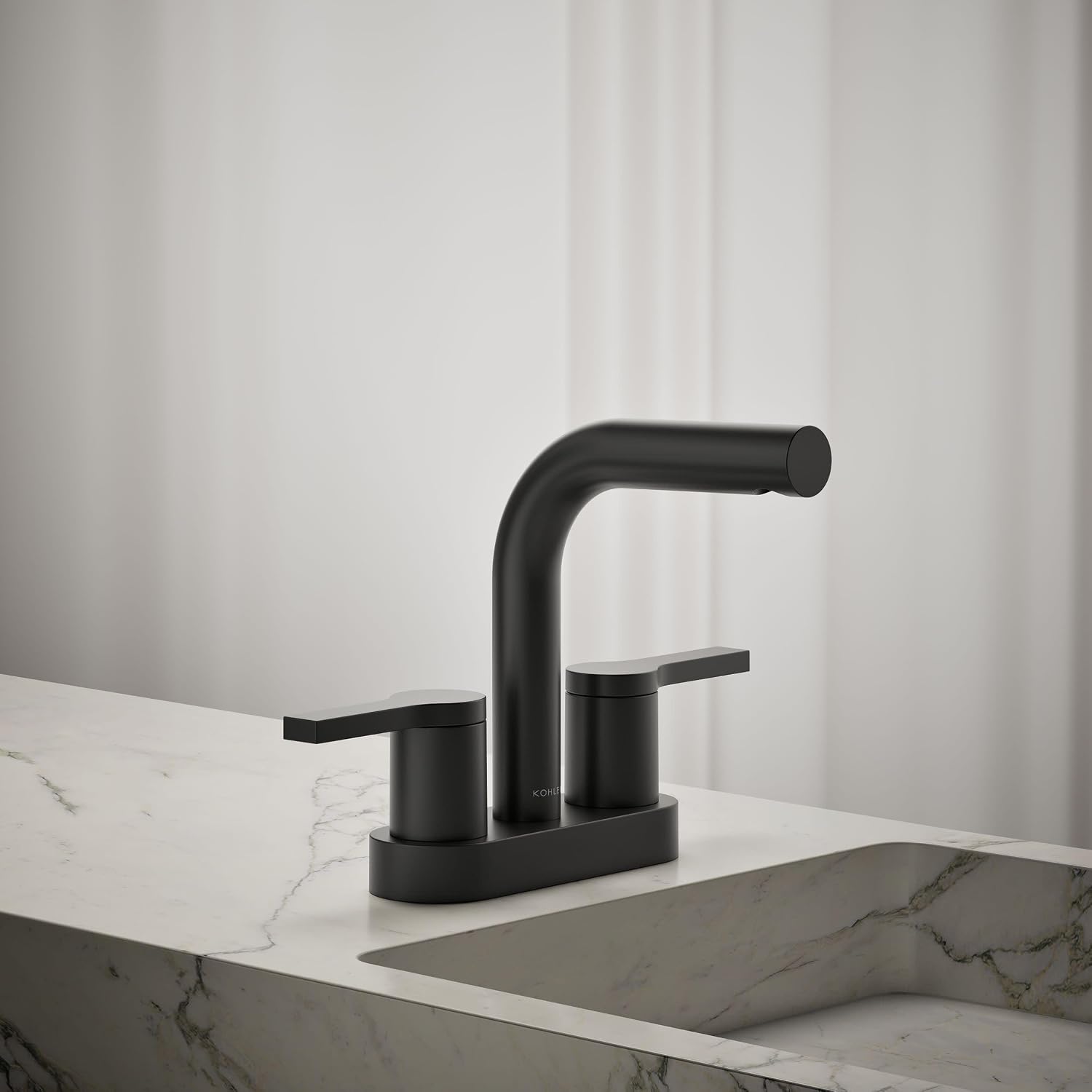
2. Matte Black. Matte black is lower-risk than gold, but not risk-free. The variable here is sheen level and undertone. Kohler’s Matte Black has a slightly warmer cast and a finer texture. Delta’s Matte Black (Lumicoat) is formulated to resist water spots — per Moen’s own Spot Resist FAQ, a similar technology is in their Matte Black line — but the base tone is slightly cooler and the surface appears slightly smoother. Where this shows up most: large surfaces like a rain showerhead next to a hand shower from a different brand. The difference in sheen becomes visible at arm’s length.
3. Brushed Nickel. Brushed Nickel is arguably the most forgiving finish for cross-brand mixing because its neutral silver-gray tone gives manufacturers less room to drift. That said, Grohe’s Brushed Nickel (classified under their Hard Graphite and Brushed Nickel options) tends toward cooler gray, while Moen and Delta Brushed Nickel both lean slightly warm. Kohler’s Vibrant Brushed Nickel sits in the middle. In a powder room with a single vanity light, you may never notice. In a master bath with four light sources, the variance can read as mismatched.
The Cross-Brand Mixing Decision Framework
Here’s the practical structure for deciding when to mix and when to commit to one brand.
Tier the fixtures by visual proximity
Every fixture in your bathroom exists on a spectrum of how close it physically gets to other fixtures and how much light falls on it. Group your fixtures into three proximity tiers:
- Tier 1 — Contact zone: Faucet + drain cover + supply stops (visible escutcheons). These are within 12 inches of each other and under direct vanity lighting. Any finish mismatch here will be immediately obvious. Stay within one brand family or request physical samples before ordering.
- Tier 2 — Mid-field: Towel bars, toilet paper holder, robe hooks, shower valve trim. These are 2–8 feet from Tier 1 and usually under ambient or shower light. Slight tonal differences survive here if the sheen level is consistent.
- Tier 3 — Peripheral: Mirror frame, light fixture, cabinet hardware. At this distance, the human eye reads “metal” more than “specific metal.” Cross-brand mixing is generally safe here as long as you’re not mixing warm and cool tones radically (matte black mirror frame with brushed gold faucet is a design choice, not a mismatch).
Architectural Digest’s editorial coverage of bathroom metal mixing consistently points to this same proximity logic: the closer two fixtures are, the more their finish needs to match in undertone and sheen, not just name.
Map undertones before you order
Before placing any order, classify every finish you’re considering as warm, neutral, or cool:
| Finish | Brand | Undertone | Sheen Level |
|---|---|---|---|
| Vibrant Brushed Moderne Brass | Kohler | Warm yellow-gold | Medium-low |
| Brushed Gold | Moen | Warm rose-gold | Medium-low |
| Champagne Bronze | Delta | Warm brown-gold | Low |
| Brushed Cool Sunrise | Grohe | Cool pale-gold | Medium |
| Matte Black | Kohler | Warm neutral | Flat |
| Matte Black (Lumicoat) | Delta | Cool neutral | Flat |
| Vibrant Brushed Nickel | Kohler | Neutral warm | Medium |
| Brushed Nickel | Moen | Neutral warm | Medium |
| Brushed Nickel | Grohe | Neutral cool | Medium-high |
Based on published finish documentation from Kohler, Delta, Moen, and Grohe, and corroborated by aggregated owner observations across Houzz community design boards.
The rule: don’t mix warm and cool undertones in Tier 1 or Tier 2. You can mix brands freely if they land in the same undertone column.
When to buy samples (and how)
This Old House’s editorial guidance on metal mixing in bathrooms makes the same recommendation any experienced designer will: request physical finish samples before purchasing fixtures over $150. All four major brands ship finish chips on request through their trade programs; some are available directly through distributor showrooms. If you’re specifying through a designer or contractor, this is standard practice — ask for it as a line item in the design service.
For a consumer buying direct: Kohler’s website offers finish cards for their Vibrant line. Moen has a finish sample program through their professional portal. Delta showrooms in most major markets stock finish chips for their Lumicoat line. Grohe’s dealer network carries StarLight and PVD comparison boards. Order chips, hold them next to each other under the actual lighting conditions in your bathroom — not showroom or warehouse light — and make the call there.
Brand-Specific Quirks Worth Knowing
Kohler is the most internally consistent brand for finish matching across product categories. If you spec Vibrant Brushed Moderne Brass on a Kohler faucet, the same finish on a Kohler towel bar, shower arm, and drain will match reliably. Kohler’s finish coordination documentation explicitly maps which finish codes are consistent across plumbing and accessories lines. Where Kohler falls short: their finish vocabulary is large and some names are confusingly close (Vibrant Brushed Bronze vs. Vibrant Brushed Moderne Brass look similar on a screen and diverge in real life).
Delta introduced the Lumicoat finish platform across their premium lines starting around 2023, and it represents a genuine improvement in durability — per Delta’s technical bulletin, Lumicoat is formulated for water-spot and tarnish resistance under hard-water conditions. The trade-off: Lumicoat finishes tend to run slightly cooler and higher-sheen than older Delta finishes on the same nominal colorway. If you’re adding Delta fixtures to an existing Delta bathroom installed before 2023, confirm whether your existing pieces are Lumicoat or the legacy finish before assuming they’ll match.
Moen is the most accessible for DIY renovators because their Spot Resist Brushed Nickel and Spot Resist Brushed Gold are among the most widely stocked finishes at retail, which means you can physically compare multiple categories in one store visit. Moen’s finish documentation is among the most consumer-readable of the four brands. One watch-out: Moen’s “Brushed Gold” and their “Antique Gold” are meaningfully different — Antique Gold is an unlacquered-look brass with more texture variation, while Brushed Gold is a uniform PVD surface. In photos they can look similar; in person they don’t.
Grohe is the premium outlier here. Their StarLight chrome is often considered the benchmark for mirror-bright chrome in plumbing hardware — reviewers and designers on Houzz consistently cite it as visibly superior to mass-market chrome in clarity and depth. For Brushed Nickel and warm tones, Grohe’s finishes tend to read cooler and more European than the American brands. This is a feature if you’re building a minimalist or Bauhaus-influenced bathroom; it’s a liability if you’re trying to match existing American fixtures.
The “If X, Then Y” Decision Rules
If you’re in a single-brand bathroom and just adding accessories: stay in that brand’s ecosystem. The finish coordination documentation from all four brands maps which SKUs share finish batch standards. Cross-brand risk isn’t worth saving $30 on a towel bar.
If you’re building a mixed-brand bathroom from scratch: lock your Tier 1 fixtures (faucet, drain, supply stops) within one brand, then match undertone — not name — for Tier 2 and 3. Use the undertone table above as your filter. Warm-to-warm crosses between Moen Brushed Gold and Delta Champagne Bronze in Tier 2 can work; warm-to-cool (Kohler Vibrant Brass + Grohe Brushed Cool Sunrise) will read mismatched anywhere they’re within four feet of each other.
If you’re mixing matte black as a primary finish: matte black is the most forgiving category for cross-brand work, but only if you’re comparing samples first. The sheen difference between Delta Lumicoat Matte Black and Kohler Matte Black is visible on large fixtures (rain heads, widespread faucets). On small accessories (toilet paper holders, hooks), most observers won’t catch it.
If you’re in a luxury specification where finish precision matters: request finish samples from every brand before the purchase order is issued. At the $5,000+ fixture budget level, the cost of samples is trivial against the cost of a return and reorder. Designers working with Waterworks, THG Paris, or Lacava know this — the same discipline applies when spec’ing Delta and Kohler.
If you’ve already ordered and the finish is close but slightly off: lighting is your lever. Warm-toned bulbs (2700K–3000K color temperature) close the gap between warm and neutral finishes considerably. Cool-toned lighting (4000K+) exaggerates any undertone mismatch. This isn’t a fix — it’s a mitigation. The right answer is always the sample chip before the order, not the lighting adjustment after.